Sewer Line Leak Detection in East Orange, NJ
Diagnosing failing cast-iron stacks and cracked clay laterals. Visual camera inspections to find the source of sewer odors and drainage failures.
Speak with a leak detection specialistThe Silent Failure of Aging Drains
Unlike a pressurized water supply line that sprays aggressively when broken, a sewer line leak is often a slow, quiet problem. Because drainage lines rely on gravity, water simply seeps out of cracks or offset joints over a long period. In East Orange, the majority of properties originally utilized cast-iron interior plumbing and clay tile exterior laterals—materials that have, in many cases, reached or exceeded their functional lifespan.
Sewer line leak detection East Orange NJ property owners require is typically prompted by unpleasant secondary symptoms. You may notice a persistent sewer gas odor in the basement, unexplained damp soil around the foundation, frequent slow drains, or sinkholes developing in the yard.
When cast iron ages, it suffers from "channel rot," where the bottom of the pipe completely rusts away while the top remains intact. Clay pipes are notoriously susceptible to shifting soils and heavy tree root intrusion, which crack the joints and allow raw sewage to leach into the surrounding earth.
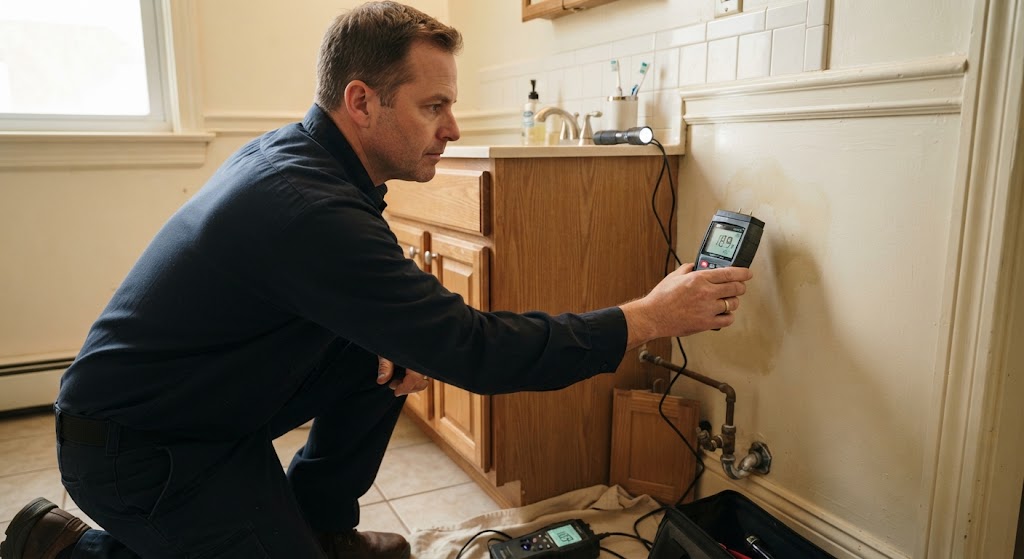
Visual and Environmental Testing
The most effective way to diagnose a sewer failure is from the inside out. We deploy high-resolution, self-leveling fiber-optic cameras down the drain lines. This allows us to visually inspect every foot of the pipe, identifying cracks, bellied (sagging) sections, heavy root infiltration, and broken joints.
Because the camera head is equipped with a transmitting sonde, once we visually locate a break on the screen, we use a surface locator to pinpoint the exact depth and location of the problem out in the yard or under the basement floor.
In cases where the leak involves sewer gases escaping into the living space but the camera shows no obvious structural failure, we may utilize smoke testing. By introducing safe, non-toxic smoke into the drainage system, we can visually see where the smoke escapes—often revealing cracked vent pipes hidden inside walls or dried-out floor drain traps.
Repairing the Lateral
Once the failure is identified, repair options vary based on the pipe's condition. Traditional excavation is sometimes unavoidable if the pipe has collapsed. However, if the structure is somewhat intact, modern trenchless solutions like pipe lining (CIPP) might be considered as a way to rehabilitate the pipe without destroying your landscaping.
Call to discuss a sewer camera inspectionFrequently Asked Questions
A persistent sewer odor, especially during wet weather, often indicates a crack in the main sewer lateral or a failed cast-iron vent stack inside a wall. Rainwater entering the system can displace sewer gases, pushing them into your living space through the break.
Yes, a high-resolution sewer camera allows us to visually inspect the interior of the pipe. We look for offset joints, massive root intrusions, channel rot in cast iron, or collapsed sections that are allowing wastewater to escape the system.
Not always. If the camera inspection reveals that the pipe is structurally sound enough, trenchless options like cured-in-place pipe (CIPP) lining might be viable. However, if the pipe has completely collapsed, traditional excavation is usually required.
Related Services
If you suspect the leak is coming from fresh water rather than wastewater, review our Water Line Leak Detection page, or Hidden Water Leak Detection for interior issues.